less social engineering and more actual engineering for this fertility crisis, please
some people are worried about the fertility rate going down. i'm worried too, but also, i think some of the other guys are doing it wrong. directionally closer is an interesting take by tumblr user tanadrin:

i don't agree with all of it; i've previously spoken with ambivalence about the strange fertility discourse that's just around the corner, and i don't think a population shrinkage is as inevitable as some others do. but i do agree that it's good (a momentuous gift, really) that we broke this particular yoke, and i agree with the sentiment that if something can be destroyed by women's liberation, it deserves to be.
does raising back the fertility rate necessarily require the rolling back of women's liberation? perhaps not, but here's the economist laying out some interesting stats:
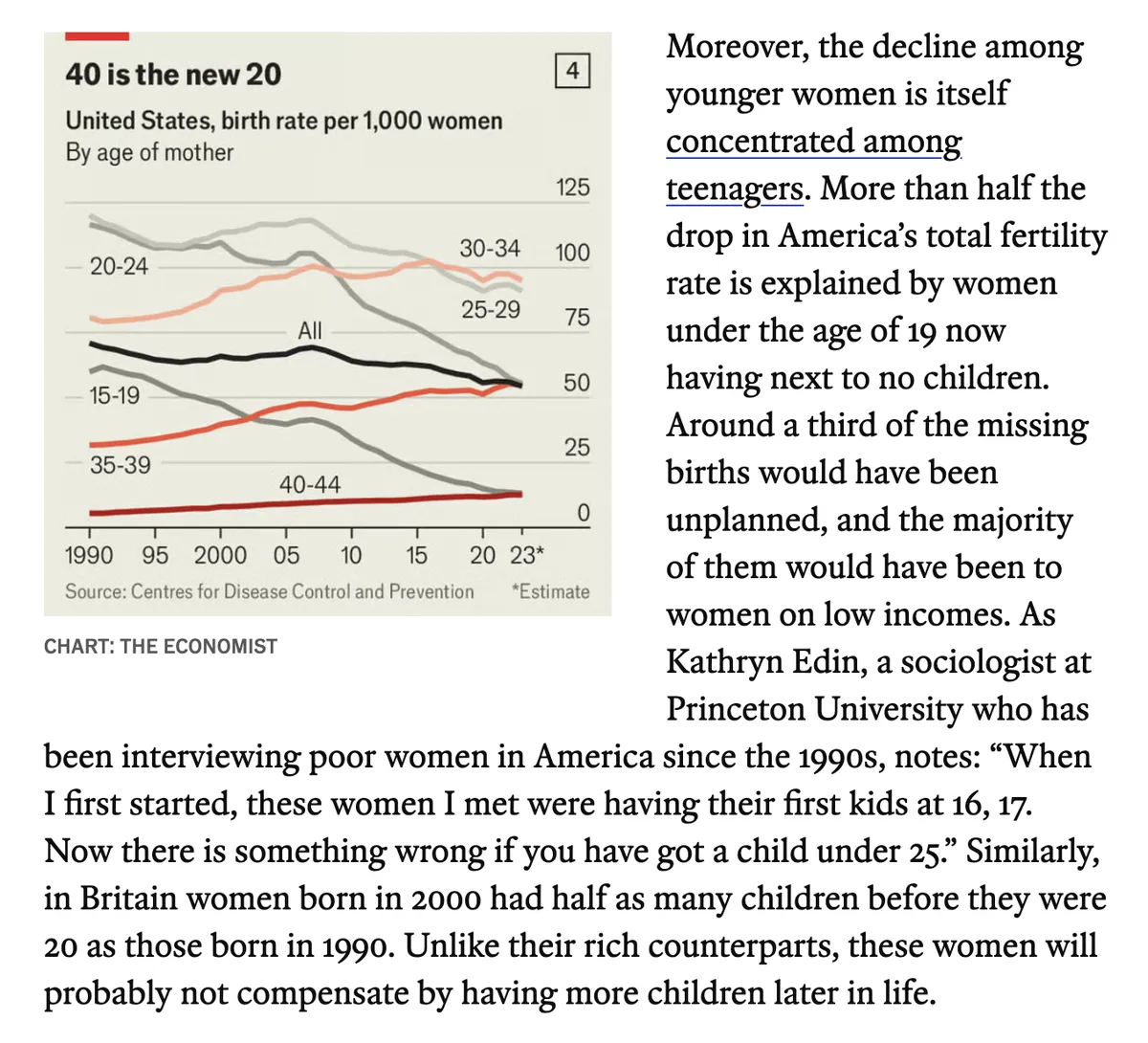
in the us, more than half of the drop in the total fertility rate (TFR) is explained by women under the age of 19 now having next to no children. in the uk, women born in 2000 are half as likely to become teen mothers as women born in 1990. in canada, too, the decline in teen motherhood is a very significant contributor to the drop in TFR.
i have a hard time imagining that the well-meaning people who call for a return to more conservative values actually want the number of sixteen year old mothers and baby scoops to go up again.
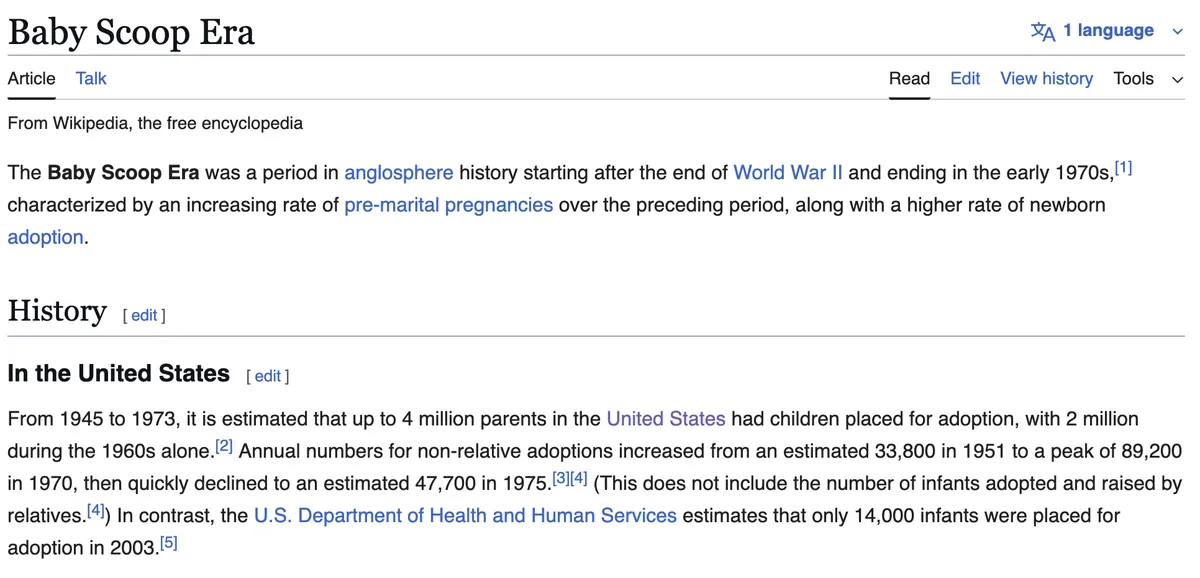
I also think it's good, when removed from the tfr thing, that the next younger cohort (aged 20-24) are also having less kids. i think it's good that we think, culturally, that something is wrong if you have a child under 25. have you met 25 year olds?

endorsed
yes, having children could make one mature and grow up faster. but i'd rather more children grow up in homes with parents who have a little more patience and perspective, even before this process. i like ozy's post about how if you don't want humanity to go slowly extinct, you must have moral standards for parenting that are achievable for most people, including the poor, the stupid, and the emotionally oblivious. here is their list:
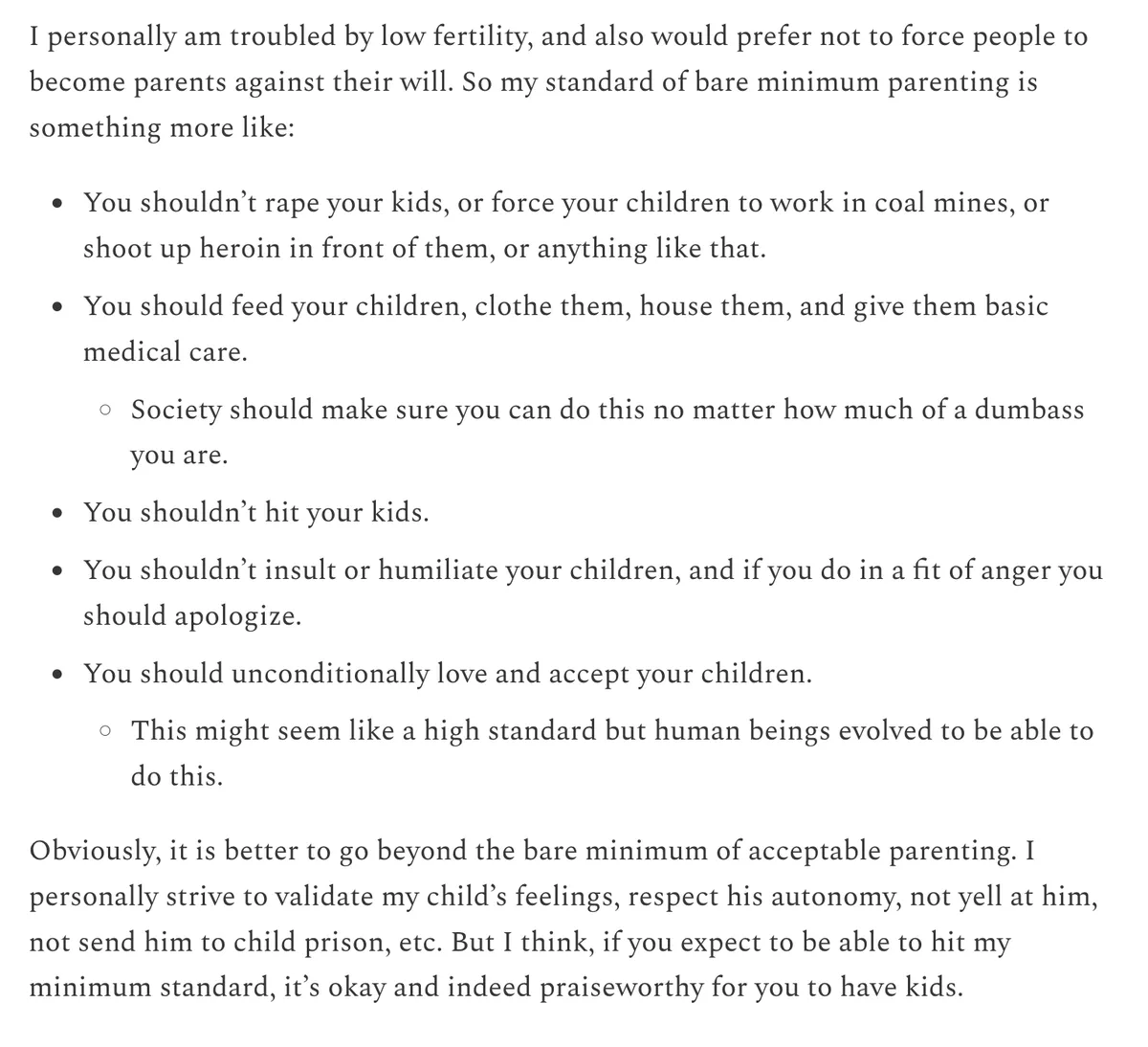
i look at this list, and i simultaneously feel discomfited by how low the expectations are (for example, no encouragement for them to explore their passions, and it's fine for them to look at screens 16 hours a day), and still bleak about if the median person can achieve this level of benignly negligent parenting.
here's another chart from the cdc report that the economist gets its charts from; with the absolute number of births per cohort.
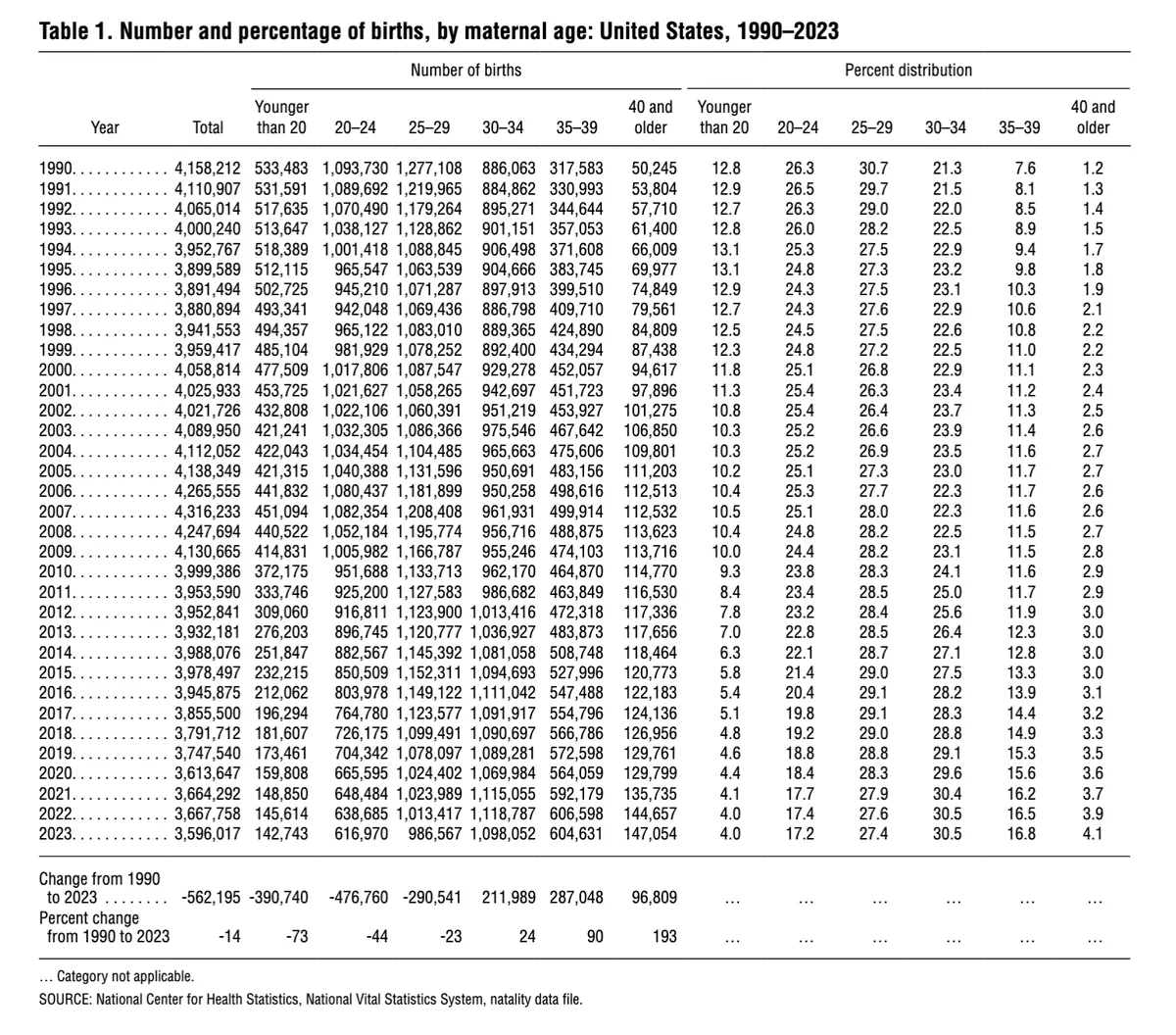
that row of numbers that are second from the bottom are quite interesting to me. we see decreases for the <20, 20-24, and 25-29 cohorts, what is still functionally a decrease for the 30-34 year olds (the population of the US grew by 80 million during the last 30 years, or 32%, so a growth of 24% of absolute births in that cohort is still negative), and a pretty big increase for the two oldest cohorts. again, aside from the tfr thing, i think this trend is a good thing. i think it indicates a positive change in the world, where more children are being born into families that planned for them, that want them, and will love them.
i think we should want older parents, enough to make up for the current shortfall in younger ones. this is not going so great currently, but that is just ("just") because there is a constraint put on us by biology, and we're stuck in some sort of appeal to nature hell.

there's no reason to be resigned to natural fertility lifespans, the same way there's no reason to be resigned to people freezing to death in winters, dying of diarrhea and viruses and cancer, having cleft lips, or having gender dysphoria. these are all things that can be solved with technology, and should be.
i dream of a world where the egg freezing process is cheap, commonplace, optimized, and comfortable, and it's considered a standard rite of passage for twenty year olds to freeze a few batches of them. yes, it's really annoying to do so right now, but i imagine that the process of getting a prescription for eyeglasses was also a pain in the ass a hundred years ago and has continually improved since then.

retvrn to xenofeminism
i think we, as a society, should continue to make human babies. but i do not want "go back to the fifties" to be on the table as an option. or, like, i don't think it's a real and viable option? the actual way we will make a sufficient amount of human babies in the future is going to be strange and possibly wig out people born in the 20th and the early parts of the 21st century, and i'm sure it's going to come with compounding tradeoffs that no one is thrilled about.
but, like, i also kind of think that that's... normal? there's this model i have of human progress, where we're solving the big problems (disease, hunger, poverty) with the tools we have available, and by now we know that these solutions will generate persnickety and ever-more wicked second-order problems (antibiotic resistance, agricultural monoculture, global warming). but we press forwards anyways because even though our tools are imperfect, we have to do what we can to staunch the suffering in the world. and i think not being able to have children, when you want them, is suffering.
and sure, ideally, the people doing the problem solving(/creation) should have some degree of epistemic modesty and small-c conservative inclinations, to minimize the impact of their interventions to the extent possible, and to seriously consider the cases in which their programs will fail, and ensure that they do so as gracefully as possible if necessary.
but equally, it is necessary to have a very strong sense of "no we are never going to force people to go back". the problems we're dealing with now are vastly preferable to the problems we solved. the decrease in teen pregnancies, that women have more options in what they want to do in life, and cheap access to birth control are all extremely good things. we now have a persnickety second order problem in the fertility rate. now we solve the persnickety second order problem, which i do not think is beyond the capacity of human civilization to do.